
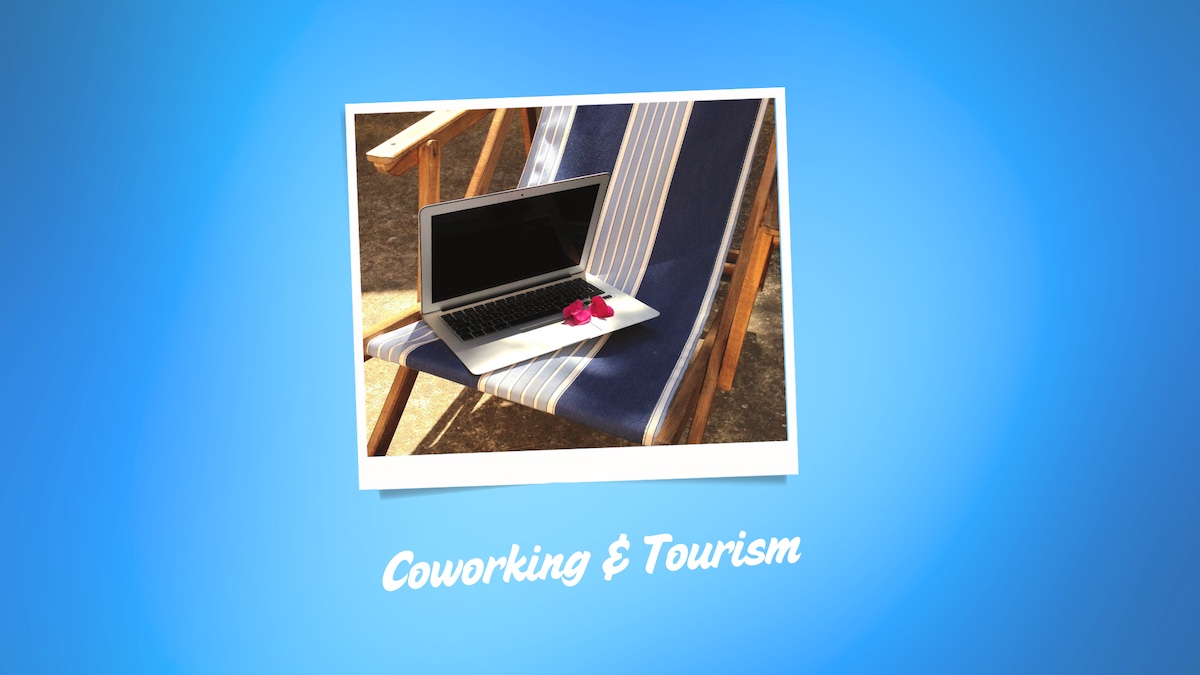
From Mallorca to Castlecamp
Whenever people talk about coworking in holiday destinations, they usually end up talking about those perfect photos of a workplace with laptop by the pool. But if you run a coworking space day in, day out, you realise that something far bigger and more meaningful is happening beneath the surface.
A recent article by Tobias Kremkau over at German cooperative CoWorkLand (reflecting on a tourism summit in Saxony-Anhalt) captured this shift brilliantly. In it, Tobias explains that coworking is not merely a niche passing trend for a nomadic elite, but is developing into a key pillar of modern regional development and, furthermore, of sustainable tourism.
Reading his piece really struck a chord with me. As I gear up for the upcoming Castlecamp in Kaprun, Austria, over the weekend, these very ideas feel more urgent than ever. The best place to share ideas like that is surely an open-format event such as a barcamp for tourism, isn’t it?
Here are my key takeaways on why work and tourism are blending. What we see on the ground in Mallorca, and why I am happy to bring this exact dialogue to the sessions at Castlecamp.
1. It’s about extending stays
Tobias highlights a vital point: the true value of coworking for destinations isn’t just renting out an office chair for a few hours or days. It’s about how it changes the nature of travel itself.
When guests know they have access to professional, reliable infrastructure, high-speed internet and a proper ergonomic setup, their holiday habits change:
- A long weekend turns into a two-week stay. Guests work remotely on Thursday and Friday, enjoy the weekend, and stay on into the following week.
- Off-season months gain vibrant life. Instead of destinations closing down completely from November to March, remote workers and flexible professionals fill the shoulder seasons.
Here in Santanyí, we’ve been experiencing this for years. Families or couples visit Mallorca, and while one partner takes time off, the other catches up on essential projects at Rayaworx. It is what makes a longer holiday possible in the first place for young self-employed people with families.
Unfortunately, the gentrification taking place in our region, which has transformed our tranquil town over the past three years, is making life harder for this very group of travellers we have come to cherish, due to soaring prices.
2. Bridging the gap between guests and locals
One of the greatest dangers in popular tourist regions is the divide between visitors and the resident community. Traditional hotels can sometimes feel like isolated bubbles. I remember that, back in the day, Airbnb was a huge success because we got to connect with the locals.
Coworking spaces operate quite differently:
„A coworking space isn’t an anonymous office building. At its best, it is an open, curated, locally rooted meeting spot“, writes Tobias Kremkau.
At Rayaworx Coworking in Santanyí, our desks were shared by local freelancers, resident entrepreneurs, wintering remote workers, and holidaymakers alike. Over coffee in our patio or at the café next door, a local IT consultant might give a visiting coach or web developer tips on hidden ‚calas‘, whilst sharing their business stories and exchanging experiences.
Sadly we had to learn, if a village becomes too expensive to live in, this mix changes.
We continue to strive to familiarise visiting coworkers with the local culture and to help them become more integrated into the local ecosystem.
- We invite them to join us visiting local events, because we want them to create real authentic connections, so that they as visitors aren’t merely consuming the destination.
- We suggest shopping at a local store rather than just going with the brands they’re more familiar with.
- We help them understand how important it is to reduce plastics, never waste drinking water and respect the fragile ecosystem of a small island in the Mediterranean.
3. Why tourism strategy needs coworking
For far too long, the tourism sector and local authorities have focused on bed capacity, admission tickets to attractions and marketing the destination as a leisure paradise. In what is almost a parallel world, hybrid working is increasingly becoming the norm, with people expecting something different from their workplace during a workation in terms of ‘quality of stay’.
In many places, the opposite is true: traditional shops are vanishing. New shops (beloning to chains) take over, leaving hardly any room for anything other than consumerism and a tourist-oriented lifestyle.
Under the microscope of a village that experiences high tourist pressure for six months of the year, we sense this lack of awareness of the changes taking place. One shop after another is opening, operating only during this period and catering solely to tourists’ needs. This year, shopkeepers or restaurant owners on the island are complaining about travellers’ low spending.
Off-season blues?
When people who combine work with travel during the off-season arrive, they find that shops and restaurants are closed and the streets are empty. A lot of houses in small villages have been sold to people from abroad, who only visit two or three times a year. And this means that the few houses available to rent are going for high prices.
In future, tourism must focus more on strengthening connections rather than exploiting people and nature. It must prioritise the long-term well-being and financial livelihoods of people in regions that rely on tourism, and place greater emphasis on protecting nature and the quality of life of the local population.
If a town wants to attract longer-stay guests, diversify its local economy, and support local hospitality year-round, professional workspace infrastructure must be part of the master plan. It connects municipal development, tourism boards, and local business owners under one shared goal.
Glimmer of hope on the horizon
Under the Turismo Que Suma brand, various initiatives are being developed to mobilise all stakeholders in the spanish tourism sector. This national project is being promoted by the big business associations and top tourist hotspots in Spain.
The idea is to encourage tourism that’s more thoughtful and balanced, focused on well-being, social and environmental responsibility, and overall excellence in the industry.

Turismo que suma – tourism that adds up, contributes.
Looking ahead to Castlecamp
Every year, Castlecamp brings together some of the smartest people in tourism, marketing and hospitality to chat about where the industry is going. If we want to build resilient, sustainable tourism models for tomorrow, we cannot talk about hospitality in isolation from how people work today. I’m eager to bring these insights from Mallorca and CoWorkLand into our sessions at the Kaprun Castle.
If you’re attending Castlecamp this year, let’s grab a coffee and chat about how we can shape the future of work-and-travel together.
See you at the castle, Doris
Illustration: DoSchu mit Canva.com • Foto: DoSchu

Schreibe einen Kommentar